even the darkest moments spark goodness

Transforming Regrets into Valuable Life Lessons

We all have some regrets—those little and big decisions in life that we wish we could undo. It’s human nature to dwell on our past choices, labeling them as “mistakes” and berating ourselves for the paths we took. A bad marriage that ended in a contentious divorce. A career move that turned out to be a poor fit. These moments often haunt us, but what if they weren’t really mistakes at all?

What if those so-called “mistakes” were actually necessary steps that brought us to the life we’re living now—a life that might, in its own way, be just right?

Every decision we make informs the next one. Each choice, whether it feels right or wrong at the time, teaches us something invaluable about ourselves. Through every experience, our preferences become clearer, our understanding deepens, and our future decisions are made with greater wisdom. Yet, we don’t always know the best course of action at the outset. Life, by its very nature, requires a certain amount of trial and error.

The beauty of this process is that even our perceived missteps play a critical role. While it’s easy to isolate a single decision and criticize it harshly, when we zoom out and view it as part of the larger picture, its value often becomes evident. What initially seemed like a detour or a disaster might have been the very thing that set us on the path toward a better, more fulfilling life.

Think about your first relationships. They might not have been the healthiest or the happiest. They may even feel like mistakes or wasted time now. But didn’t those experiences teach you what to look for—and what to avoid—in future relationships? Didn’t they train you to be more discerning and self-aware?  Are you now in a better relationship and does that have at least a little to do with your previous relationship misteps?

The same goes for your first jobs. Maybe you couldn’t stand the work, the environment, or the role itself. Perhaps you counted the minutes until you could leave and regretted chasing the opportunity. But wasn’t the next opportunity all the sweeter for it? Didn’t you approach it with clearer priorities and a deeper understanding of what you truly wanted?  The previous ‘mistakes’ made you much better at looking for and, importantly, asking more exactly what you now know you need!

This isn’t a coincidence—it’s growth. Every experience, even the difficult ones, advises and trains us, offering the perspective and relativity we need to thrive. Without those “mistakes,” we might never arrive at the clarity required to make better choices.

So, instead of dwelling on our history of missteps with frustration or regret, what if we reframed them as essential stepping stones? These moments, however challenging, are often the very catalysts that lead us toward our happiest and most authentic lives.

Of course, it’s unrealistic to expect ourselves to celebrate when things go wrong. Mistakes hurt. But perhaps we can offer ourselves a bit of grace. Perhaps we can acknowledge that those tough moments—the failed relationships, the wrong turns, the less-than-ideal jobs—are not failures at all. They’re part of the process, essential in shaping who we are and guiding us toward what’s next.

In the end, our so-called “mistakes” make us smarter, stronger, and better equipped for life. They are not just setbacks; they are vital lessons. And in that sense, mistakes are not only inevitable—they’re essential. 

(**Disclaimer:  I am not suggesting impetuous or reckless behavior that will increase the likelihood of silly mistakes.  In fact, just the opposite — be careful and as disciplined as possible when making life decisions applying all the information, knowledge, intuition and third party advice to make the best decisions possible no matter what.  But, if /when you make a mistake, know that it’s all part of life, adds strength and character and, when used correctly, brings you to an increasingly informed stage in life.  And, don’t be too hard on yourself along the way.  Nobody is perfect.)

Do What You Love & Life Will “Happen” The Way It’s Supposed To

Having reached an unexpected and somewhat anticlimactic place in my life, I’ve decided to allow life to simply “happen” and to stop forcing it. Let me explain.

As a long-time “successful” entrepreneur, I always had some viable business project in motion. At one point, I felt like I could do no wrong, finding success in virtually every business venture I undertook. I had two lucrative exits from startups I co-founded, among other successes. Money was never an issue—I just made more.

Now, as I race into my 50s, the tides have turned. I’ve been humbled by a few neutral or outright business failures. I’ve lost money and time. More importantly, I’ve lost confidence. Mistakes have made me introspective, and while I know better, I’m hard on myself. Our brains love to dwell on self-proclaimed “problems,” and I find myself focusing on failures more than the goodness in my life. Objectively, I know we can’t win them all but but it’s hard to keep that focus.

Recently, I’ve even applied for a couple of jobs—coming close but not getting either. Mentally, I chalk these up as more losses. So, what’s happened? Where is my mojo?

A Hard Truth: You Can’t Force Life

All this reflection has led me to a realization, and hence, this blog entry! Just like you can’t fit a square peg in a round hole, you can’t force certain things in life. While we may feel pressured to work, earn money, or conform to societal expectations (what we ‘should’ be doing at various points in our lives), sometimes life has other plans for us. The key is recognizing when to let go and trust the process.

But what are those plans? How do we figure them out?

The epiphany I’ve had is this: Life unfolds the way it’s supposed to when you let it flow and stop forcing outcomes.  Or, at least I’m actively testing this theory which seems to be quite logical.

A Natural Flow: Lessons from Dating

Just like finding a life partner, the best things tend to happen when you least expect them. When you focus on what makes you happy—activities that bring you joy—you naturally attract the right people and opportunities. I’ve shared this advice with peers struggling to find a spouse and I actually applied it my life and have been happily married for 10-years. Often, frustration stems from trying too hard, which creates pressure and disappointment. Hence the thesis:  When we let go and immerse in fulfilling activities, focusing on happiness more broadly, things usually fall into place naturally.

Human nature drives us to chase after what we want. And while that’s productive in many cases, it can backfire in areas like dating—or, as I’ve realized, in other aspects of life.

Applying the Same Lesson to My Life

Because I’m not working right now and haven’t had recent business successes, I feel uneasy. I see my peers being very successful and seemingly happy – which adds pressure.  That uneasiness drives me to try even harder, which only seems to make things worse. So, I’ve decided to take my own advice: I’ll stop chasing after business opportunities & jobs (they’re overrated anyway!) and instead focus on hobbies, interests, and personally enriching activities.

I’m relinquishing control—for a little while—and trusting that, during this period, I’ll gain experiences, skills, friends, and inspiration that will guide me to my next professional chapter. Importantly, I’m aiming to find contentment and ease along the way.

A Year of Growth: Sailing, Cooking, and Letting Go

I’ve always been interested in sailing and cooking and want to get better at both. Why not devote the next year to pursuing these passions? I can do this in a productive, cost-effective way, even on a tighter budget. By the end of the year, I’ll be more skilled, more experienced, and my life will be richer for it.  That’s almost a certainty.  

Concurrently, I’ll embrace the idea of relinquishing control. Trusting the process, I believe the rewards—whether they’re new skills, friends, or fresh inspiration—will outweigh the uncertainty of this period. And at the very least, I’ll be eating more tasty home-cooked meals this time next year!

Does this resonate with you in a similar way?  Please share.  I’ll be sure to report back on how this journey unfolds and if the winds were favorable.  

The Value of Having a Dog & What We Can Learn from Them

loving dog, companion, loyalty, friend,  joy, happiness

Dogs are often called “man’s best friend” for a reason. They offer us unconditional love, loyalty, and companionship. Having a dog can enrich our lives in many ways, and we can learn a lot from them about living a happy and fulfilling life.  I know this is common knowledge, but I had no idea how meaningful it would be until I owned a dog.

Here are just a few of the things we can learn from dogs:

  • To be present in the moment. Dogs live in the moment. They are not worried about the past or the future. They are simply content to be in the here and now. We can learn from dogs to appreciate the present moment and to let go of our worries about the past and the future.  As part of this, dogs, amazingly, don’t harbor anger, frustration or anything of that nature which allows them to accept and move on unencumbered. 
  • To be kind and compassionate. Dogs are naturally kind and compassionate creatures. They love unconditionally and are always there for us, no matter what. We can learn from dogs to be more kind and compassionate to ourselves and others.  Dogs don’t judge people.  You will note that dogs are just as happy living with a homeless person as they are living with a wealthy family in a mansion.  Dogs don’t have preconceived bias, notions or other prejudice… everyone is equal.
  • To be joyful and playful. Dogs love to play and have fun. They teach us to appreciate the simple things in life and to enjoy ourselves. We can learn from dogs to be more joyful and playful in our own lives. 
  • To be loyal and trustworthy. Dogs are fiercely loyal to their owners. They are always there for us, no matter what. We can learn from dogs to be more loyal and trustworthy in our own relationships.  It is so comforting to know that, no matter what, my dog will be by my side, regardless of other distractions.  
  • To be grateful. Dogs appreciate the simple things in life, such as food, shelter, and love. They teach us to be more grateful for what we have.  Even a stick or tennis ball can keep a dog happy for hours. Simply running with another dog makes both dogs so blissful.  
  • Sense of Kindness.  Dogs pick up the most subtle sense of kindness and loving energy.  They thrive on it and it, in turn, it engenders us to be that that way more of time. 

Having a dog can also teach us valuable life lessons about responsibility, commitment, and patience. Dogs require regular care and attention, and we need to be willing to put in the time and effort to give them the best possible life. This can teach us to be more responsible and committed to our own goals and aspirations.  NOTE:  if you are not in a position to properly care for a dog (a big responsibility), why not be an uncle or aunt to a friend’s dog?  That way, you share in the joy of a dog during times when you may not be capable of caring for a creature that is 100% reliant on you. 

If you are considering getting a dog, I encourage you to do so. Dogs make wonderful companions and can enrich our lives in so many ways. They can teach us to be better people and to live happier and more fulfilling lives.

Here are some additional thoughts on the value of having a dog:

  • Dogs can help us to be more active and to get more exercise.
  • Dogs can help us to meet new people and to build social connections.
  • Dogs can help us to feel less lonely and more connected to the world around us.
  • Dogs can help us to develop a sense of purpose and responsibility.
  • Dogs can help us to learn more about ourselves and about the world around us.

Even though being away from the duties of a caring for a dog can be a relief from time to time, we miss our dog when we are traveling and cannot wait to return to see our dog.  If you are lucky enough to have a dog in your life, cherish them. They are truly special creatures that can make our lives better in so many ways.  

Young vs. Older Parents: Which Is Better?

If you’re thinking about having a child, you may be wondering whether it’s better to be a young parent or an older parent. There are pros and cons to both, and ultimately the best decision for you will depend on your individual circumstances and preferences.

Benefits of being a young parent:

  • More energy: Young parents often have more energy to keep up with young children. This can be helpful during the early years, when children are constantly on the go.
  • More time to spend with your children: Younger parents may also have more time to spend with their children, as they may have fewer career commitments and responsibilities.
  • More fertile: Young women are generally more fertile than older women, so they may have an easier time getting pregnant.

Benefits of being an older parent:

  • More financially stable: Older parents are often more financially stable than younger parents. This can be helpful in providing for a child’s needs.
  • More experienced: Older parents may have more experience in life and parenting, which can be helpful in raising a child.
  • More established in their careers: Older parents may be more established in their careers, which can give them more flexibility and control over their work schedules. This can be helpful in balancing work and family life.

Things to consider:

  • Health risks: There are some increased health risks for both young and older parents. For young mothers, there is a slightly increased risk of premature birth and low birth weight babies. For older mothers, there is a slightly increased risk of miscarriage, stillbirth, and birth defects.
  • Fertility: Fertility declines with age, so it may take longer for older couples to get pregnant.
  • Energy levels: As people get older, their energy levels may decline. This can be challenging for parents, especially during the early years.
  • Parenting style: Younger parents may be more likely to use a permissive parenting style, while older parents may be more likely to use an authoritative parenting style.
  • Life goals: It is important to consider your life goals when deciding when to have children. If you have ambitious career goals, you may want to wait until you are more established in your career before having children.
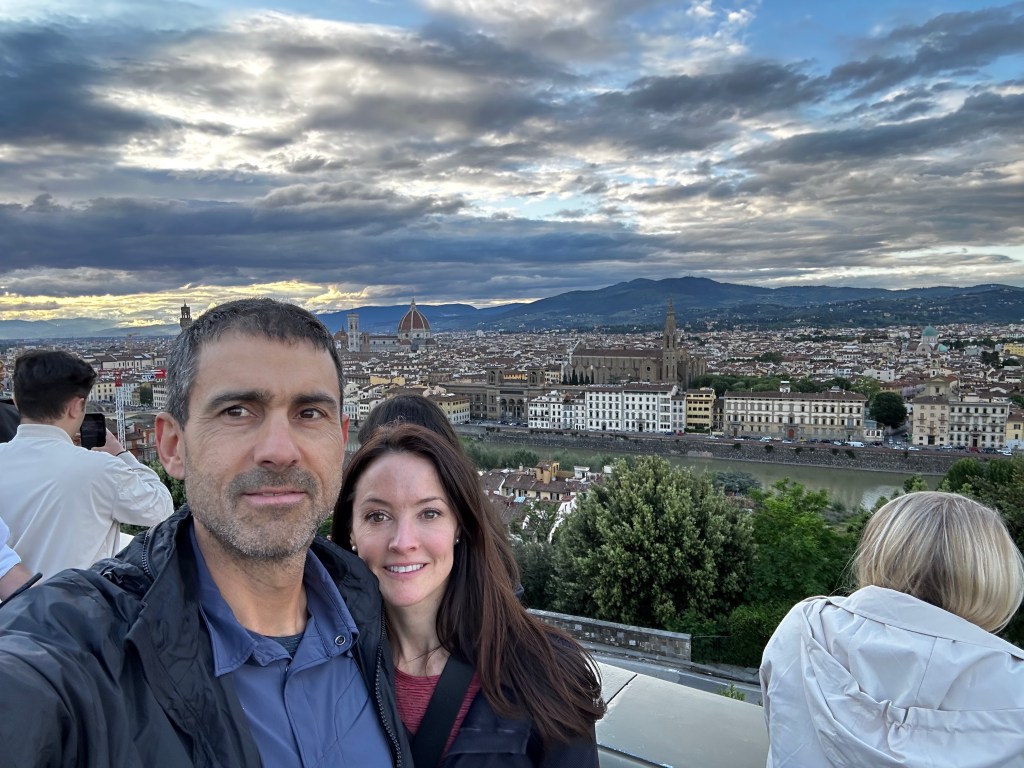
  • Consider if you’re ready to restrict your freedom and spontaneity (the photo above is from Italy. We will likely not be taking adult trips like this for a while!)

Ultimately, the best decision for you will depend on your individual circumstances and preferences. There is no right or wrong answer, and both young and older parents can be great parents.

Here is some advice for both young and older parents:

  • Young parents: Don’t be afraid to ask for help from your support system. Your parents, other family members, and friends can be a valuable source of support and advice.
  • Older parents: Be patient with yourself and your children. You may find that you don’t have as much energy as you used to, but you have the benefit of experience and wisdom.

Remember, the most important thing is to love and support your children.  My wife and I are planning to have a child very soon (hopefully) and I couldn’t be more excited.  We are ready to trade instant gratification for a family — better later than never!

Cheer Up in 60-seconds: Use this…

topoftetonvillage

Life is full of highs and lows, ups and downs. It’s human nature.   If life was excellent all of the time, we’d appreciate it less. But, that doesn’t mean that we shouldn’t have a quick remedy to cheer ourselves up, right? Well, I’m going to share a method that is at our fingertips all the time and in unlimited supply! Here’s the remedy: the moment you find yourself lingering in negative / unhappy / low energy thoughts… stop what you’re doing for a moment, close your eyes and think of three or four things that you are grateful for in your life. They can be big or little things, tangible or intangible, relationships, friends, opportunities, experiences, health, fitness… anything. There are so many things in life that we can appreciate. We all have a list and it has nothing to do with monetary wealth.Read More »

Finding the Wins amidst the Losses

DSC01915-1749470 (Medium)

In the summer of 2006, at the absolute top of the housing market boom in the SE and literally weeks before one of the biggest housing crashes in history, I purchased my new lakefront house!   The housing market was booming and everyone was making money. Timing was perfect! I figured I’d get a great house, have fun using it and then make a bundle selling it whenever I wanted. Well, things didn’t quite work out the way I wanted. I, like so many, had no idea how wrong I was and how the looming risk was so imminent and so substantial.

As you would expect I grossly overpaid for the house and, today, I’m suffering the consequences as I try to sell it. Twelve-years later and the house is finally under contract to be sold for 30% less than I paid.  Didn’t our parents tell us that real estate is supposed to be a good investment and appreciate ~5% /year?   Well, I guess, like anything, there are good real estate opportunities and bad ones, and so many factors impact the transaction. What makes it worse is that the loss in value of the house is not the only loss. Think of the opportunity cost for the money that has been stuck in a depreciating asset for 12-years. I could invested the money elsewhere where it would have compounded interest for years. Well, enough about the loss.

Interestingly, my misfortune turns out to be a boon for the new buyer who is getting an amazing lake house for tens of thousands less than I paid. One man’s suffering is certainly another man’s fortune. I guess that creates balance in the universe. Furthermore, I’ve learned that I cannot expect to win every time. Other people have to win too!

As I reflect on the lake house transaction further and focus differently, I realize I had substantial intangible gains on the house.   My friends, family and I shared dozens of weekends relaxing, cooking, boating and chatting at the house. It was (and is) a special place that that created indelible memories.   And, if I had not bought the lake house, I would never have met my wife (longer story). Those are some big wins!

When I look back on my life 30-40 years from now, I trust that I will not regret my lake house purchase, despite it being a financial loss. I realize that winning and losing is totally relative. I am grateful for the opportunity to own a lake house and to have shared that with my friends and family. In the scheme of things, I now recognize this as more of a win and great learning experience. Don’t get me wrong… For now, I’m happy to rent a lake house from time to time when the urge arises (and won’t be buying a second home any time soon).

The Smarter Sooner takeaway: be sure to look closely at all of life’s events as there usually are wins (sometimes tucked away) that may just overshadow even the most prickly financial losses. Good luck!


Hyper Minds

IMG_5031

I never noticed how hyper my mind was until I tried to calm it down a bit. For the longest time, I tolerated my mind’s incessant chatter and activity, assuming it was completely normal. My mind swirled with literally constant activity, whether I was reviewing what just happened, trying to remember to-do lists or contemplating what was soon to happen. Even when there was no reason to be thinking and I thought I was relaxed, I found something to consume me mentally. Does this sound familiar? It only occurred to me recently that the mind, like any tool, should be able to rest. In other words, it does not have to ‘work’ all the time.   And, only when I actively calmed my mind (using some rudimentary meditation techniques), did I realize what a peaceful and energizing experience it was.Read More »

The Zig-Zag Strategy

IMG_3840

When most people ‘Zig’, try to ‘Zag’. That’s the Zig-Zag strategy – short and simple.   The idea is to try and structure your life in manner where you can do MORE of what you want to do (and what makes you happier) instead of what you’re supposed to do. If you’re forced to ZIG (move with the masses) all of the time, you’ll feel refreshed and liberated when you can ZAG (do what you want vs. what you’re conditioned to) from time to time. The key is to get creative / innovative and find these ZAG methods. Obviously, there are times in our lives when we have to do certain things – sticking to strict schedules at work, school, etc. I don’t suggest being irresponsible. But, take a moment to see where there might be opportunities to liberate yourself with some less common, less standard, less conformist methods.Read More »

A Simple Way to Expand Your Mind

AudioBooks

I’ve always felt that I should be reading more books, but somehow, despite the best intentions, find myself with little time to actually crack open a book and focus. I often buy books (physical and kindle books), read sporadically, make very slow progress and become frustrated knowing I’m missing so much richness by not reading more. It nags me.   Does this sounds familiar to you?   15- years ago, this posed a problem, but not any more!. Enter Audio Books and Podcasts, which offer a rich supplement (or complete alternative) to reading – something that I wish I started using sooner. Trust me — once you start accessing the libraries of audio books and podcasts, you’ll be amazed. I was.

Read More »

Leverage

IMG_4504

Another important life efficiency concept, distilled by Tony Robbins and others, is Leverage. Leverage is critical because, if used correctly, it frees us to spend more time doing: 1) things that we want to do and, 2) things that are simply a better use of our time. In simplest terms, leverage suggests that we reduce our own personal burdens, workloads and general time commitments by delegating to and utilizing other people and resources in our lives as much as possible. In other words, don’t constantly feel like you have to do everything yourself. Delegate, share, and diffuse the burden. Think how it might feel to reclaim some time back in your life.Read More »